
Is Stress Making Your Hair Fall Out? What Reston Professionals Should Know About Shedding, Thinning, and Hair Restoration
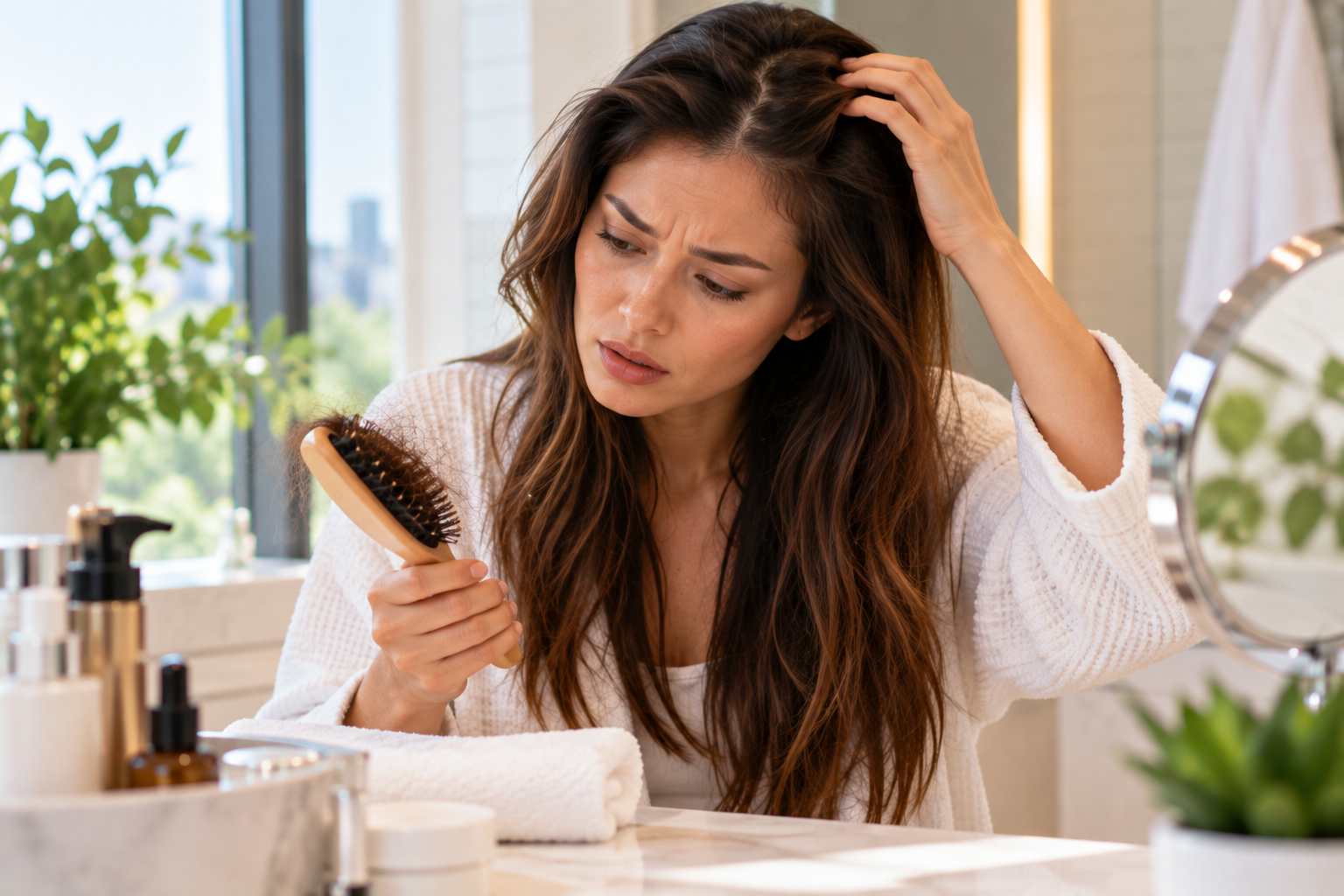
It usually starts in the shower. You notice more strands than usual wrapped around your fingers, or a clump in the drain that seems bigger than last week. Then your brush starts collecting more hair, your ponytail feels thinner, or your part looks a little wider under office lights.
If you've just come through a tough stretch at work, a major life change, or a period of poor sleep, the timing might not be a coincidence. Stress is one of the most common triggers of sudden hair shedding, and it hits busy professionals and women especially hard. Here's how stress affects your hair, how to tell temporary shedding from longer-term thinning, and how hair restoration at Aesthetic Chemistry MedSpa in Reston, VA, can help you get ahead of it.
Can Stress Really Cause Hair Loss?
Yes. Significant physical or emotional stress can push a large number of hair follicles into the resting phase at once. A few months later, those hairs shed together, which is why stress-related hair loss often appears well after the stressful event itself.
This type of shedding is called telogen effluvium. According to the American Academy of Dermatology, it often shows up two to three months after a triggering event, such as illness, surgery, childbirth, major weight loss, or intense emotional stress. Many people lose noticeably more hair than the typical 50 to 100 strands a day during this phase.
How long does stress-related hair shedding last?
For many people, telogen effluvium settles within about six months once the trigger is resolved. However, if stress continues, or if shedding unmasks an underlying pattern of thinning, hair may not fully bounce back on its own.
What are the signs that stress is affecting my hair?
Watch for:
- Sudden increase in shedding when brushing or washing
- Overall thinning rather than one bald patch
- Hair loss that began a few months after a stressful period
- A thinner ponytail or more visible scalp under bright light
Why Are Busy Professionals So Prone to Stress-Related Thinning?
High-pressure jobs often bring chronic stress, inconsistent sleep, skipped meals, and long hours, all of which can affect hair health. When stress becomes a constant rather than an occasional spike, hair follicles may struggle to stay in their growth phase.
Northern Virginia is full of demanding careers. Government contracting deadlines, tech launches, long commutes along the Dulles Toll Road, and frequent travel through Dulles International all add up. Many professionals don't realize how much strain they're under until their body sends a signal, and thinning hair is often one of the first visible ones.
Can poor nutrition from a busy lifestyle affect hair?
It can. Hair follicles need protein, iron, vitamin D, and other nutrients to grow. Rushed meals, crash diets, or rapid weight loss can contribute to shedding. If you're also working on weight goals, it's worth discussing hair health with your provider during a medical weight loss consultation.
Why Do Women Experience Hair Thinning Differently?
Women often notice diffuse thinning along the part or crown rather than a receding hairline. Hormonal shifts from pregnancy, postpartum recovery, perimenopause, menopause, and thyroid changes can all influence how hair grows.
Postpartum shedding, for example, is a well-known form of telogen effluvium that usually peaks a few months after giving birth. During perimenopause and menopause, changing estrogen levels can make female pattern hair loss more noticeable. When stress is layered on top of these hormonal changes, thinning can feel sudden and overwhelming.
Is hair loss in women permanent?
Not always. Shedding caused by stress or postpartum changes is often temporary. Female pattern hair loss is more progressive, but early treatment can help slow it and support regrowth. The key is not waiting too long.
When Should I See a Professional About Hair Loss?
Consider professional help if shedding lasts longer than a few months, if you notice your part widening or crown thinning, or if hair loss is affecting your confidence. Earlier treatment typically leads to better results.
Some hair loss requires medical evaluation. If you notice patchy bald spots, scalp pain, redness, or scaling, or if you have symptoms like fatigue or unexplained weight changes, it's a good idea to see your physician or a dermatologist to check for underlying conditions such as thyroid issues or iron deficiency.
What Hair Restoration Treatments Are Available in Reston, VA?
Aesthetic Chemistry MedSpa offers non-surgical hair restoration options designed for men and women experiencing thinning or shedding. These include Alma TED® Hair Restoration, PRP hair restoration, and supportive supplements like Nutrafol®.
You can explore all options on our hair restoration page.
What is TED hair restoration?
TED Hair Restoration is a needle-free treatment that uses acoustic sound waves and air pressure to deliver a specialized serum into the scalp. It's designed to support healthier follicles with little to no downtime, making it a favorite for professionals who can't step away from their schedules. Learn more about how it works in our article on how TED hair restoration helps combat hair loss in men and women.
How does PRP help with thinning hair?
PRP hair restoration uses platelet-rich plasma drawn from your own blood. The concentrated growth factors are applied to the scalp to support follicle activity and encourage thicker, healthier growth. It's a popular choice for people who prefer a natural, body-based approach.
Do supplements like Nutrafol work?
Nutrafol is a hair growth supplement formulated to address common root causes of thinning, including stress, hormones, and nutrition. It's often used alongside in-office treatment for added support. We carry Nutrafol Women's Balance (https://www.aestheticchemistrymedspa.com/products/nutrafol-womens-balance-2) and Nutrafol Men (https://www.aestheticchemistrymedspa.com/products/nutrafol-men-hair-growth). Browse our Nutrafol collection: https://www.aestheticchemistrymedspa.com/skincare/nutrafol-2
How Long Does It Take to See Results From Hair Restoration?
Hair grows slowly, so patience is part of the process. Most people begin noticing less shedding first, followed by gradual improvements in thickness over several months.
Treatment plans are tailored to each client, and the number of sessions depends on the cause and severity of thinning. Many clients start with a series of treatments, then move to maintenance. Our Hair Restoration Package, for example, combines a series of TED treatments with a Nutrafol supplement. Check our promotions page for current offers.
Can I combine hair restoration with stress management?
You should. Treatment works best when the triggers behind shedding are addressed too. Better sleep, balanced nutrition, and regular movement all support healthier hair. Some clients also explore IV therapy or vitamin B12 injections as part of a broader wellness routine.
FAQs About Hair Restoration in Reston, VA
Will my hair grow back after stress-related shedding?
In many cases, yes. Telogen effluvium is often temporary. If thinning continues after several months, professional hair restoration can help support regrowth.
Is hair restoration safe for women?
Yes. Both TED and PRP hair restoration are suitable for women and men. Your provider will review your history to recommend the right approach.
Does PRP hair restoration hurt?
Most clients feel mild discomfort. Numbing options can help make the experience more comfortable.
Is there downtime after TED hair restoration?
TED is needle-free with little to no downtime. Most people return to work right after their appointment.
How many hair restoration sessions will I need?
It varies. Most plans include a series of treatments followed by maintenance, based on how your hair responds.
Can men use these treatments too?
Absolutely. Both TED and PRP are effective options for men experiencing thinning hair or a receding hairline.
Don't Let Stress Have the Last Strand
Stress may be part of your career, your season of life, or both, but it doesn't have to cost you your hair. Recognizing the signs early and pairing healthy habits with the right hair restoration treatment can help you protect what you have and encourage regrowth.
If you're noticing more shedding or thinning in Reston, VA, contact Aesthetic Chemistry MedSpa or call (703) 563-1988 to schedule a consultation. Our team will help you understand what's going on and build a plan that fits your hair, your schedule, and your goals.