
Why Your Skin Feels Looser Than It Used to, and What Actually Helps
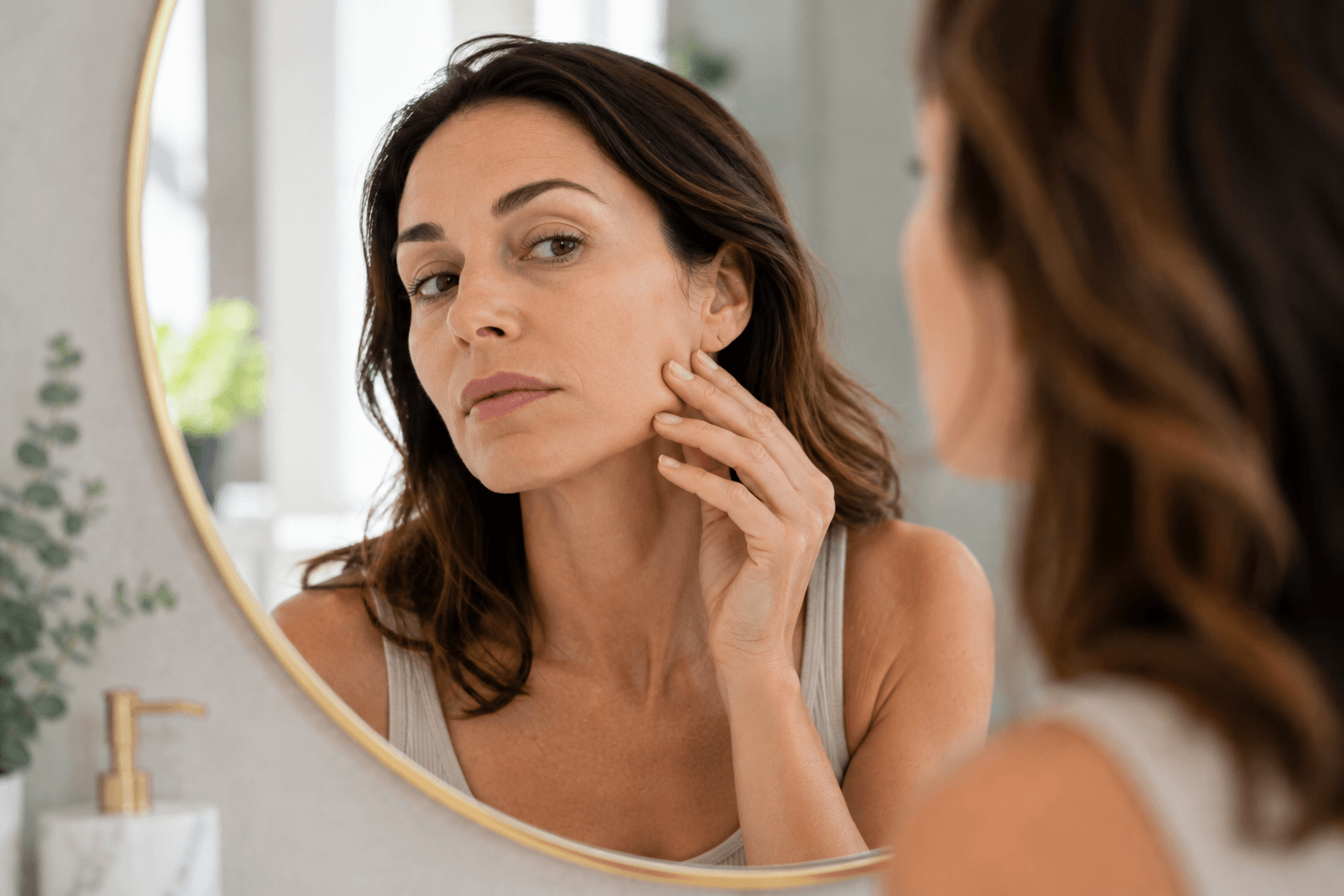
There is a specific moment a lot of clients describe to us. You catch your reflection at an angle you are not used to, maybe in a car window or a dressing room mirror, and something along your jawline or neck looks different than you remember. Not necessarily older exactly, just looser. That subtle loss of firmness is one of the most common concerns we hear about at Aesthetic Chemistry, and it is also one of the most search-worthy questions in aesthetics right now: what actually works for laser skin tightening, and is it the right approach for your skin.
Here is what is actually happening beneath the surface, and how our Reston, Virginia team addresses it with technology that goes beyond traditional laser treatments.
What Causes Skin to Lose Its Firmness?
Skin laxity does not happen overnight, even though it can feel that way. It is the cumulative result of several biological processes working against each other over time.
Why Does Skin Sag as We Age?
Collagen and elastin, the two proteins responsible for skin's structure and bounce, decline steadily starting in our mid to late twenties. Production slows by roughly one percent per year, which sounds small until you add it up over a decade or two. Add in sun exposure, gravity, and repetitive facial movement, and the result is skin that gradually stretches and does not spring back the way it once did.
Does Weight Change Affect Skin Laxity?
Yes. Significant weight loss, including from GLP-1 medications, can leave behind loose skin because the skin has been stretched and may not fully retract on its own, especially in areas like the face, neck, jawline, and abdomen.
Are Sagging Skin and Wrinkles the Same Thing?
Not quite. Wrinkles are creases caused by repeated muscle movement and thinning skin, while sagging is more about structural laxity, the skin and underlying tissue losing their ability to hold a firm position against gravity. The two often show up together, but they are addressed differently.
What Actually Tightens Skin Without Surgery?
Traditional lasers work by heating the surface layers of skin to stimulate collagen, but many clients are surprised to learn that some of the most effective non-surgical tightening technology available today actually goes deeper than a laser can reach.
What Is Morpheus8 and How Is It Different?
Morpheus8 uses radiofrequency energy delivered through microneedling to reach deeper layers of tissue than surface lasers typically can. This combination stimulates new collagen and elastin production at a structural level, which is why it has become one of our most requested treatments for jawline, neck, and lower face tightening. We have covered the details of why so many clients are switching to this approach in our article on why Morpheus8 is the non-surgical solution everyone is talking about.
How Many Sessions Does It Take to See Results?
Most clients see initial improvement within a few weeks, with continued tightening over the following three to six months as new collagen builds. A series of three sessions spaced about four to six weeks apart is typical for noticeable, lasting results.
Can Skin Tightening Be Combined With Other Treatments?
Frequently, yes. Clients dealing with both volume loss and laxity often pair Morpheus8 with dermal fillers to restore fullness while the skin itself firms up over time. Others add a PRP facial to support collagen renewal even further.
Where on the Face and Body Does This Matter Most?
Skin laxity shows up differently depending on the area, and understanding where your concern falls helps determine the right approach.
Why Does the Jawline Show Sagging First?
The jawline sits at the intersection of facial volume loss and gravity's pull, which is why it is often the first place clients notice softness or a less defined contour. Targeted treatment here can restore a cleaner, more sculpted line without surgery.
Can Skin Tightening Help Under the Eyes?
Delicate areas like under the eyes require a gentler approach. Many clients in this area benefit from a PRP under eye treatment, which uses your body's own growth factors to support thinner, more fragile skin.
Is It Ever Too Early to Start?
No. In fact, addressing early laxity before it becomes significant tends to produce better long-term results, since it is easier to maintain existing collagen than to rebuild it after years of decline.
What Should You Expect at a Consultation?
A proper evaluation starts with an honest look at your skin's elasticity, your goals, and your timeline. Our providers will walk you through what a treatment like Morpheus8 can realistically achieve for your specific concern, and just as importantly, what it cannot do, since severe skin laxity may ultimately require a conversation about surgical options with a specialist.
What Factors Affect How Well Skin Tightening Works for You?
Skin tone, baseline collagen quality, age, and the specific area being treated all influence how dramatic your results will be. Generally, clients with mild to moderate laxity see the most satisfying improvement, while those with more advanced sagging may see meaningful but more modest change. Sun damage history also plays a role, since heavily sun damaged skin tends to have less collagen reserve to draw on during the healing and rebuilding process.
How Should You Prepare for a Skin Tightening Session?
We generally recommend avoiding sun exposure, retinoid products, and certain supplements like fish oil in the days leading up to treatment to minimize bruising and irritation. Staying well hydrated in the days before and after your appointment also supports the skin's natural healing response.
Is Skin Tightening a One-Time Fix or an Ongoing Process?
Collagen production naturally continues to decline with age, which means skin tightening is best thought of as an ongoing relationship with your skin rather than a single corrective event. Many clients complete an initial series and then return for a single touch-up session once or twice a year to maintain their results as part of a broader anti-aging routine that may also include facials, dermal fillers, or neurotoxin treatment depending on their goals.
Frequently Asked Questions
Is Morpheus8 the same as a laser treatment? Not exactly. Morpheus8 uses radiofrequency energy combined with microneedling rather than a traditional laser, which allows it to reach deeper layers of tissue for more structural tightening.
Does skin tightening hurt? Most clients experience mild discomfort during treatment, which is managed with topical numbing beforehand. Downtime is minimal, typically a few days of redness similar to a mild sunburn.
How long do skin tightening results last? Results from a full treatment series generally last a year or longer, with many clients returning for a single maintenance session annually to sustain their results.
Can skin tightening treat loose skin after weight loss? Yes. Many clients who have lost significant weight, including through our Weight Loss Injections program, use skin tightening treatments to address leftover laxity.
Who is a good candidate for non-surgical skin tightening? Adults with mild to moderate skin laxity who want to avoid surgery are typically excellent candidates. Those with more significant sagging may see the best results when skin tightening is used alongside other treatments.
So, Is It Time to Firm Things Up?
Loose skin has a way of creeping up on us quietly, one season at a time, until suddenly the mirror looks a little different than we remember. The good news is that today's technology can address that structural laxity in ways a traditional laser never could, without surgery or significant downtime.
This guide was updated in August 2026 to reflect the latest treatment protocols at Aesthetic Chemistry. Visit our Morpheus8 service page or contact our Reston, Virginia office to schedule your consultation.